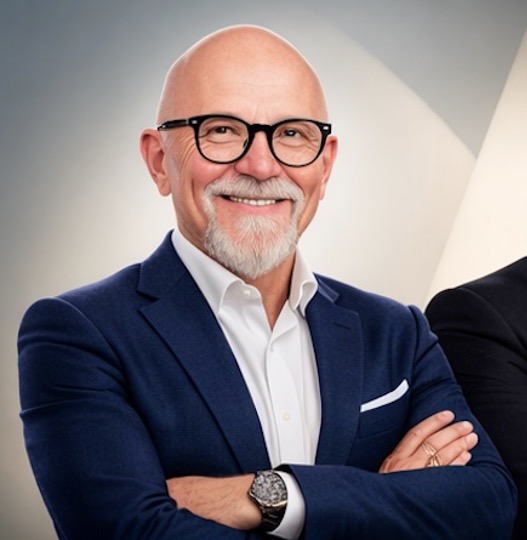

Tapio’s story
Strategy & Execution
My professional background is rooted in critical IT and infrastructure environments — where reliability, cybersecurity, commercial discipline, and customer commitments are non-negotiable.
Throughout my career — across leadership, commercial, product, and delivery roles — I have operated in organizations where execution clarity and operational stability had to hold every single day.
That experience shaped my view on performance.
Strategy matters.
Technology matters.
But without clear decision rights, visible accountability, and disciplined follow-through, complexity quickly turns into cost.
I have worked at the intersection of technology, sales, and execution — from entrepreneurial environments to system-critical infrastructure organizations. That cross-functional perspective revealed a consistent truth:
Results rarely fail because of ambition.
They fail because ownership is unclear and decisions lack structure.
At SKILLhill, my focus is on strengthening execution architecture:
- Clear decision-making frameworks
- Explicit accountability
- Strong negotiation capability
- AI and digital readiness grounded in operational reality
- Commercial discipline aligned with strategic ambition
Because in critical systems, there is no room for ambiguity.
The same is true for leadership.
Clear decision-making frameworks
Explicit accountability
Strong negotiation capability
AI and digital readiness grounded in operational reality
Commercial discipline aligned with strategic ambition
Because in critical systems, there is no room for ambiguity.
The same is true for leadership.oots reach back to Karelia.
His grandfather lost everything in the war and rebuilt his life from zero, becoming a multi-industry entrepreneur. That legacy shaped Mika early: think boldly, take responsibility, and build even when the starting point is nothing.
Years later, in senior leadership roles within large corporations, Mika saw a pattern that repeated across industries:
Revenue can grow fast. Markets can expand. Targets can be exceeded.
But if leadership clarity weakens and people are misaligned, growth becomes fragile.
That insight became the foundation of his professional mission.
Mika went on to design and lead customer and employee experience programs across industries — from automotive to global technology giants. IBM, Microsoft, Fujitsu, HP, Tieto, and CGI implemented his development models. The impact was measurable: more than 100,000 professionals engaged across over 100 countries, with international recognition and awards.
Yet scale alone was not the goal.
SKILLhill was founded from a clear conviction: organizations do not need more initiatives — they need integrated systems that align leadership, culture, and execution.
The SKILLhill model is built on facts, intelligent customization, and disciplined habit change at every level of the organization. Because sustainable growth is not created by momentum alone.
It is built through clarity, accountability, and daily behavior that supports strategy.

